
Polarization echoes reveal an active past in the galaxy GSN069
The galaxy GSN 069, located about 250 million light-years from Earth, is well known to the astronomical community because of being the first source in which X-ray quasi-periodic eruptions (QPEs) were discovered in 2019. This extreme phenomenon, still not fully understood, is attributed to the central supermassive black hole and consists of repeating, high-amplitude, X-ray bursts of variable duration and period, depending on the emitter.
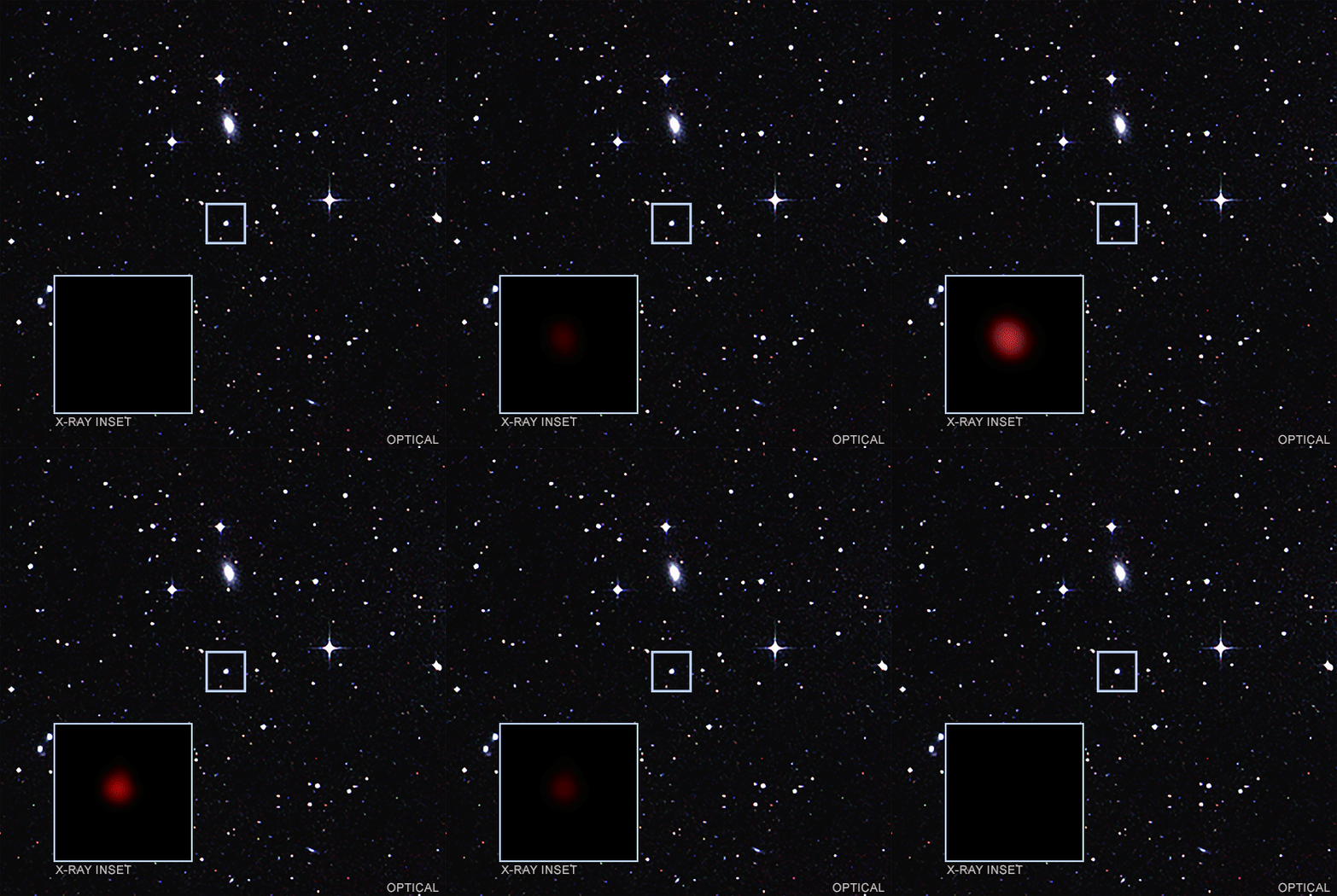
Now, a new study involving the researchers Beatriz Agís-González and Ioannis Liodakis of IA-FORTH, published in Astronomy & Astrophysics Letters, has managed to glimpse the past of this galaxy and reconstruct the activity of its nucleus thousands of years ago using a novel approach. “This is the first time that optical polarization has been used to trace the past activity of the nucleus of a galaxy that exhibits quasi-periodic X-ray eruptions”, explains Beatriz Agís-González, a researcher at IA-FORTH. “Until now, it had not been possible to detect an increase in the amount of polarized light as we move away from the center of any galaxy and attribute this increase to the action of the central supermassive black hole.”
Echoes of light from its past activity
The study shows that GSN 069 wasn't always as quiet as it appears today in the optical range. By analyzing its polarized light, the team detected what can be considered "light echoes" of its past activity. This radiation, emitted by the galaxy's core in the past, was scattered by the surrounding material and has taken longer to reach us than direct light. Thanks to this delay, the researchers were able to observe signs of an earlier episode in the galaxy's history, when its central black hole was sustained in activity.
The results provide new evidence for one of the main debates surrounding GSN 069. Until now, it was unclear whether the energy released in the past came from a conventional active galactic nucleus (AGN) or from a series of extreme events in which stars were destroyed by getting too close to the black hole. This study points to the former: GSN 069 hosted a 'normal' active galactic nucleus in the past, which helps to better understand the environment in which the enigmatic quasi-periodic eruptions occur.
A complete analysis of polarized light
To arrive at these results, the team used the FORS2 instrument, installed on one of the Very Large Telescope (VLT) units of the European Southern Observatory (ESO), combining two complementary techniques. On the one hand, imaging polarimetry made it possible to locate where polarized light is concentrated in the image of the galaxy. “In GSN 069, we observed that the center, where the black hole is located, shows no polarization, while this increases progressively towards more external regions, a characteristic sign of scattered light,” explains the lead author of the study.
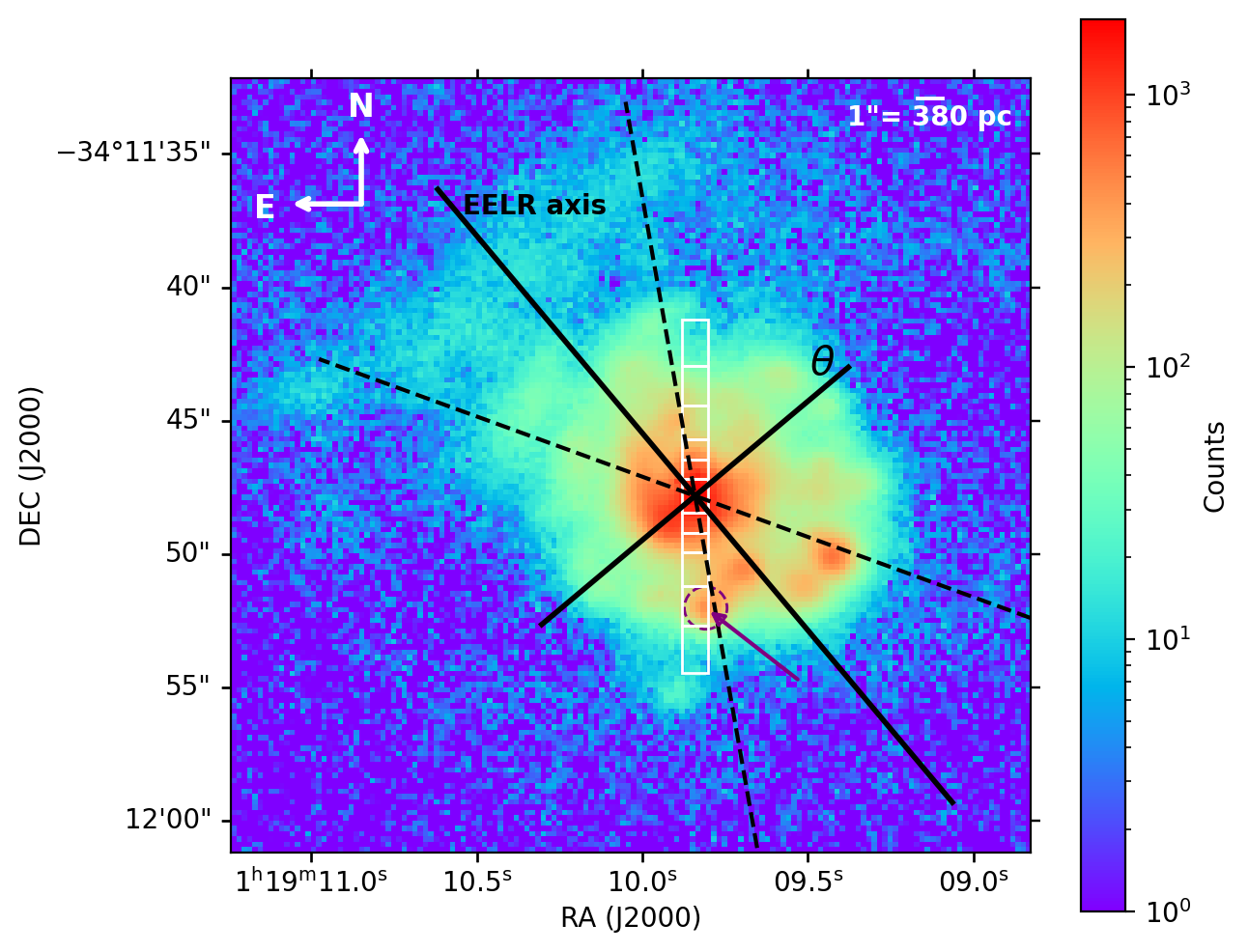
Spectropolarimetry allowed for a deeper study by analyzing how this polarized light is organized. Although no significant changes were found between the different colors of light, this analysis confirmed that the signal originates from the galaxy's nucleus and is scattered in gas regions with an irregular structure.
“This work opens a new avenue for studying the past history of galaxies with supermassive black holes and suggests that polarized light can become a key tool for reconstructing episodes of activity that would otherwise remain hidden,” concludes Dr. Beatriz Agís-González (IA-FORTH). A press release on these results, is available here by IAA/CSIC (in spanish).
Article: Agís-González et al. "Polarization echoes from past nuclear activity in the quasi-periodic eruption source GSN 069", A&A, 705, L13 (2026)